Stamped concrete patios and pool decks in the Poconos
Concrete pressed and colored to look like slate, cobblestone, brick or wood plank and priced by pattern. Built for freeze-thaw winters. Ask for the spec in writing.
Stamped concrete is a regular concrete slab that’s colored and then pressed with patterned mats while it’s still workable, so it passes for stone or brick. Done well, it gets the look of a stone patio for less than the stone. Done badly, it’s a large, expensive slab that flakes and cracks. This page covers what it costs here and what to ask before you sign.
What stamped concrete costs
These are planning ranges from published 2025–26 pricing, not a quote. A local concrete contractor prices your job after seeing the site. The pattern and the number of colors drive the price more than anything else, so that’s how the table is split. For your own size, use the concrete cost estimator.
| Finish | Per sq ft | Patio, 20 × 16 (320 sq ft) | Pool deck, 600 sq ft |
|---|---|---|---|
| Broom finish (for comparison) | $6–10 | $1,900–3,200 | $3,600–6,000 |
| Stamped, one pattern and color | $10–15 | $3,200–4,800 | $6,000–9,000 |
| Stamped, with a contrasting border | $14–20 | $4,500–6,400 | $8,400–12,000 |
| Stamped, multiple patterns, two-tone | $18–25 | $5,800–8,000 | $10,800–15,000 |
What moves the price from there is tearing out an existing patio or slab, a sloped yard that needs regrading or a step, a spot the concrete truck can’t reach (the concrete gets pumped, which typically adds $1,000–2,000), and curved or free-form edges that might take more forming. Small patios cost more per square foot because the truck and setup cost about the same either way.
Patterns and color
Patterns
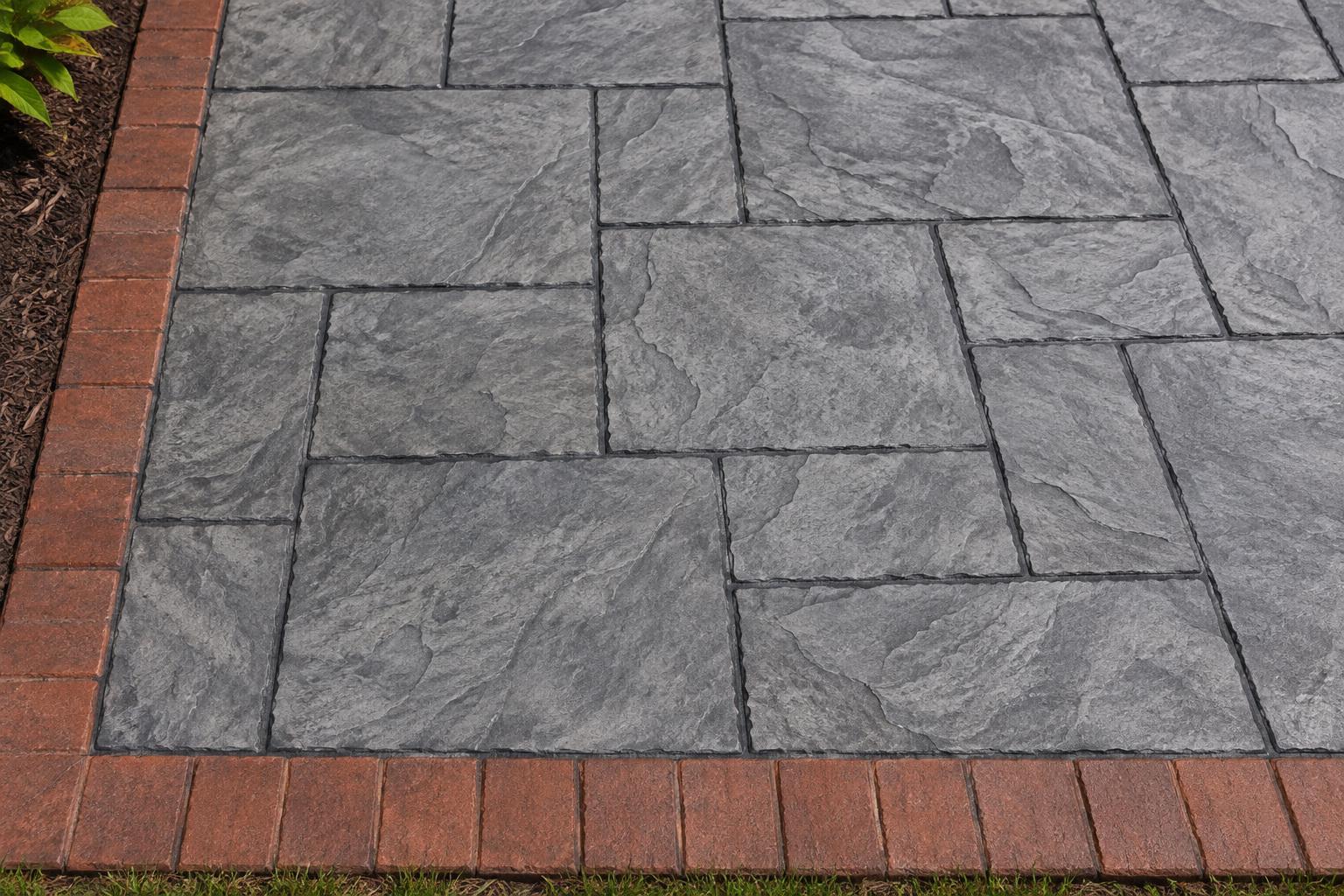
The common ones are ashlar slate (large rectangular “stones”), random stone, cobblestone, brick (often used as a border), and wood plank. A single pattern over the whole slab is the simplest and least expensive. A border (say, a brick soldier course around a slate field) is a second set of mats and more hand work, which is why it costs more.
Color
Stamped concrete usually gets two colors. One is a base color mixed into the concrete or broadcast onto the surface. The other is a darker release color that settles into the joints and texture so the “stones” read as separate pieces. Two-tone and hand-stained work costs more because it’s more labor, but it’s also what keeps stamped concrete from looking like one big painted slab.
Pool decks and hot tub pads
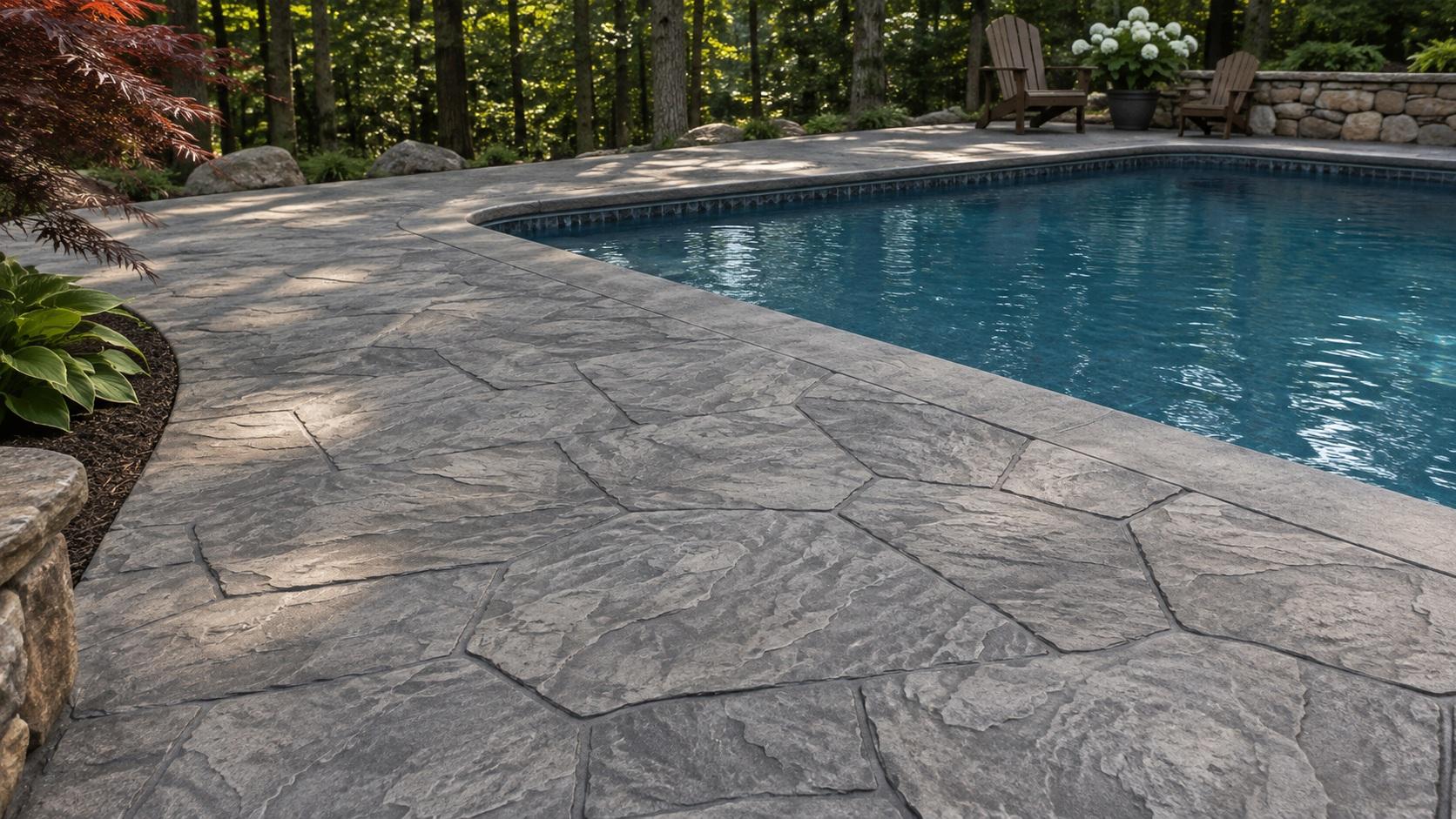
Pool decks are where stamped concrete earns its keep, and where the finish needs the most thought. Wet, smooth concrete is slippery. A deeper texture helps, and so does a matte sealer with a slip-resistant additive rather than a glossy one. Ask what the contractor does for grip around the water.
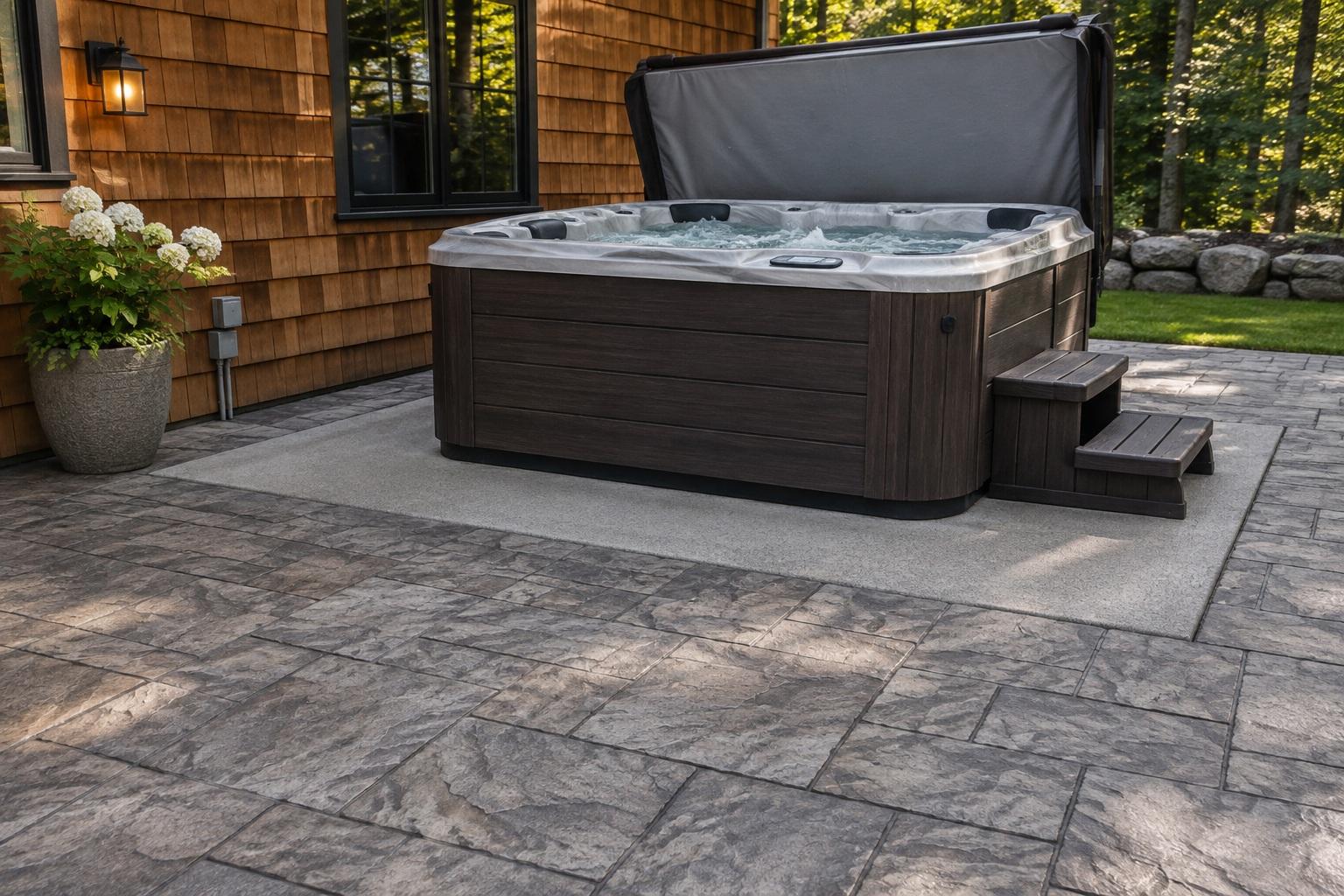
Hot tub pads carry a lot of weight in a small area, especially once the tub is filled and in use. Most tub makers publish what the base under their tub needs (usually a level, reinforced slab of a minimum thickness), so get your model’s install guide to the contractor before the pour. A broom finish is often plenty for the pad itself, with the stamped part as the patio around it.
Built for Pocono winters
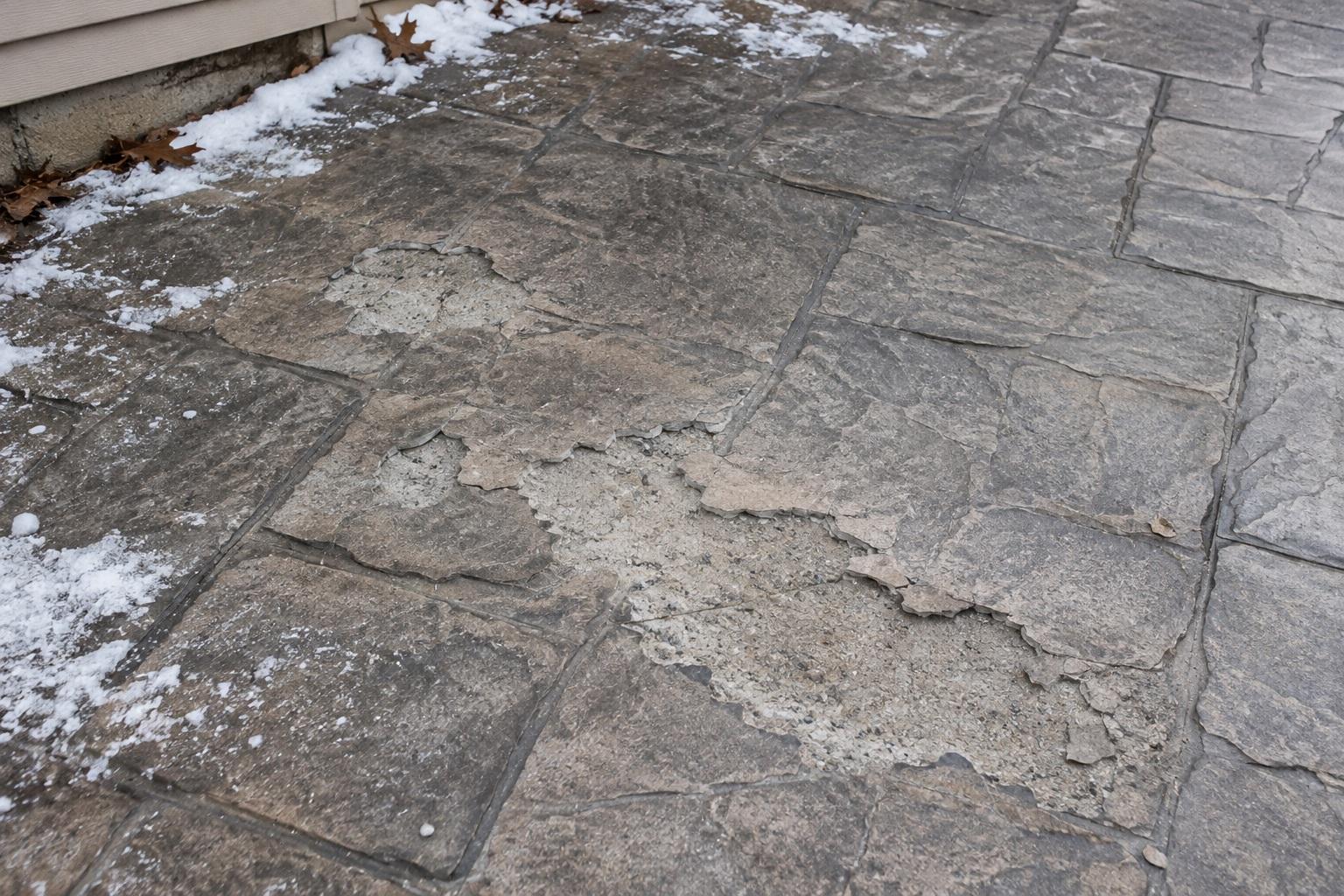
Freeze-thaw is what kills outdoor concrete here. Water soaks into the surface and expands as it freezes, which slowly pops the top layer off. A slab that lasts needs:
- Air-entrained concrete. Industry guidance for freeze-thaw climates typically calls for about 6% entrained air, so freezing water has room to expand. Without it the surface can scale (flake off in patches) within a few winters.
- Strength of typically 4,000 psi or more for exterior flatwork in a northern climate.
- A compacted gravel base, so water drains out from under the slab instead of freezing and heaving it.
- Control joints, cut or tooled into the slab. All concrete cracks eventually, and the joints make it crack in straight lines where you planned, not at random across the patio. On stamped work they’re hidden in the pattern.
- A sealer, renewed every few years to keep water and salt out and to keep the color from fading.
Ask for the slab thickness, the gravel base depth, the reinforcement, and the mix (air-entrained, 4,000 psi or more) in writing. The pattern is the part you see. Those four specs are the part that decides whether you see it in ten years.
Patio work falls under Pennsylvania’s Home Improvement Consumer Protection Act. Contractors who do $5,000 or more of home improvement work a year must register with the Attorney General, and the registration number belongs on the estimate and the contract. You can look up a registration before you sign. This is consumer information, not legal advice.
When to pour
Concrete needs to stay above freezing while it cures, so outdoor pours stop once nights turn consistently cold and start again in spring. Pricing a patio over the winter gets you on a contractor’s calendar early.
New concrete is at its most vulnerable in its first year. Shovel it and use sand for grip. Never use ammonium-based deicers on concrete at all.
Common questions
How much does a stamped concrete patio cost in the Poconos?
A one-pattern, one-color stamped patio runs about $10–15 per square foot installed, so a 20 by 16 ft patio lands around $3,200–4,800, as a planning range from published 2025–26 pricing (not a quote). Borders and multiple colors push it toward $14–25 per square foot. Try the estimator for your size.
Is stamped concrete slippery around a pool?
It can be when wet, especially with a glossy sealer. A deeper texture and a matte sealer with a slip-resistant additive can make a big difference. Ask the contractor what they use.
Does stamped concrete crack?
All concrete cracks eventually. The goal is to control where. Properly spaced control joints hidden in the pattern lines make the cracks happen there. A good base and air-entrained mix help keep the slab from heaving and scaling in the first place.
How often does stamped concrete need sealing?
Sealer is typically renewed every few years, more often on a pool deck or a slab that sees a lot of salt. Sealer is what keeps the color rich and water out of the surface.
Can I get a price without being at the property?
Yes. The estimator only needs the size, the finish and a few questions about the site. A contractor will still look at the site before giving a final price, but you can start the quote from wherever you are.
Other work priced here
Price your stamped concrete patio, then ask for the spec in writing.
Free, no obligation, and you don’t have to be at the property. See your price range first, then a local concrete contractor follows up.