Foundation cracks, sunken slabs and crawl spaces
Some concrete work doesn’t wait for spring. Sealing leaking foundation cracks, lifting sunken slabs, encapsulating crawl spaces, and coating basement floors are all cases that require attention regardless of season. Get a price range online, then ask for a quote in writing.
Concrete problems usually show up as water. These include a damp streak down a basement wall, or a walkway that tips toward the house and sends runoff where it shouldn’t go. Most of the fixes are indoor or under-slab work, so they can be done through the winter when outdoor pours have stopped. Here’s what each repair is for and what it costs.
What these repairs cost
Planning ranges from published 2025–26 pricing, not quotes. For a range on your own job, use the estimator’s Indoor & repair tab.
| Repair | Planning range | Priced by |
|---|---|---|
| Foundation crack injection | $300–800 | per crack, poured wall |
| Slab lifting — mudjacking | $3–8 | per sq ft lifted |
| Slab lifting — polyurethane foam | Varies widely; quoted after a look | per sq ft lifted |
| Crawl space encapsulation | $3–7; $7–10 if wet | per sq ft of floor |
| Dehumidifier for a sealed crawl space | $800–2,000 | added to encapsulation |
| Basement or garage floor coating | $3–7 basic, $7–12 flake or metallic | per sq ft |
Foundation crack repair: injection
Hairline-to-narrow cracks in a poured concrete basement wall are usually sealed from the inside by injecting them under pressure, so the material fills the crack all the way through the wall. Polyurethane foam stays flexible and is the usual choice for stopping a leak. Epoxy cures hard and bonds the two sides for cracks where strength matters as well as water. Most single cracks take a visit, not a project.
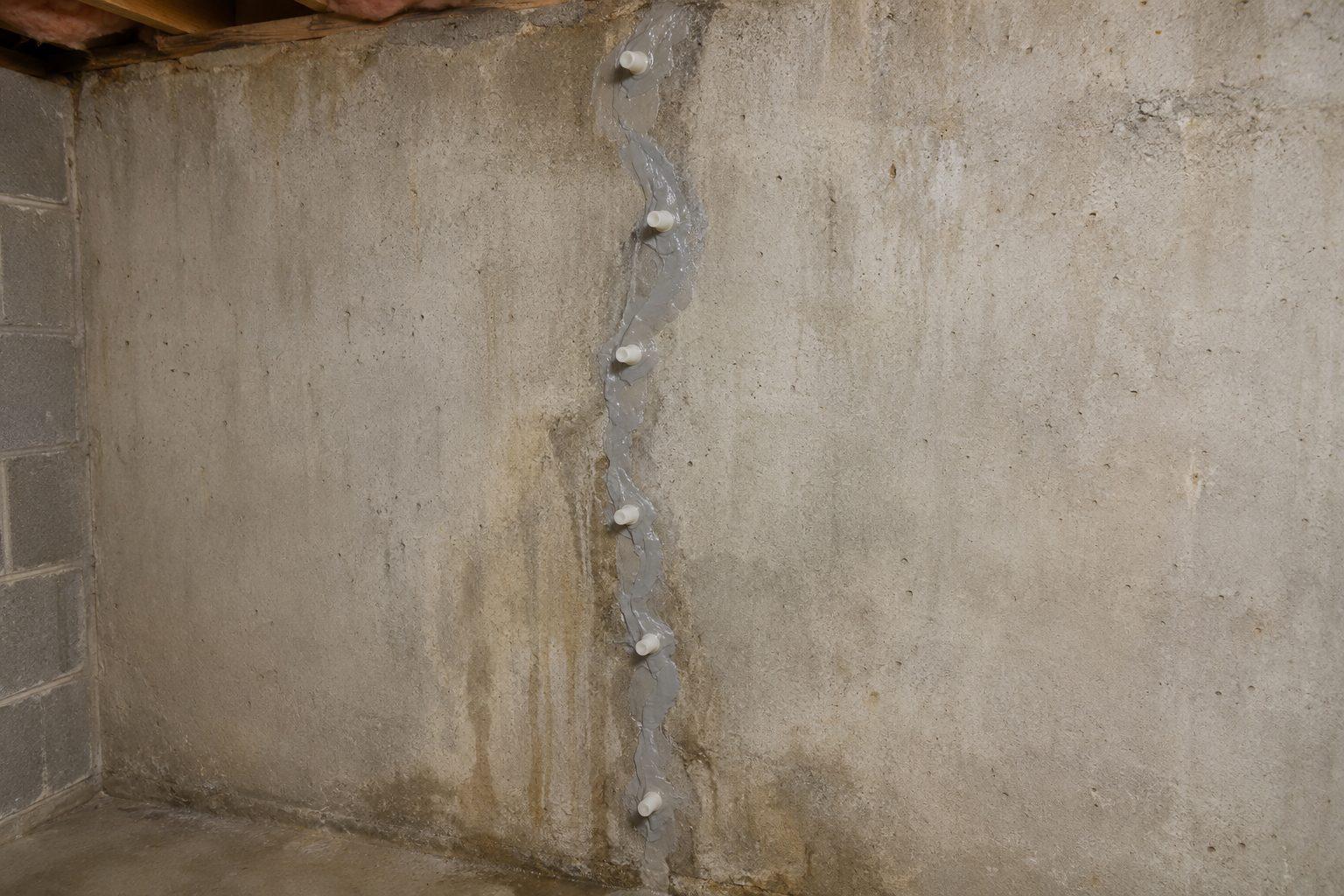
A horizontal crack, a wall that bows inward, stair-step cracks in a block wall, or a crack much wider at one end than the other point to the wall moving. Sealing these only hides the movement. Those need a structural assessment first. Ask for one before paying for injection.
Mudjacking or foam: lifting a sunken slab
A walkway, patio, step landing or garage floor that has sunk usually has a void under it where the soil washed out or settled. Rather than tearing it out, the slab can often be raised back into place by drilling small holes and pumping material underneath.
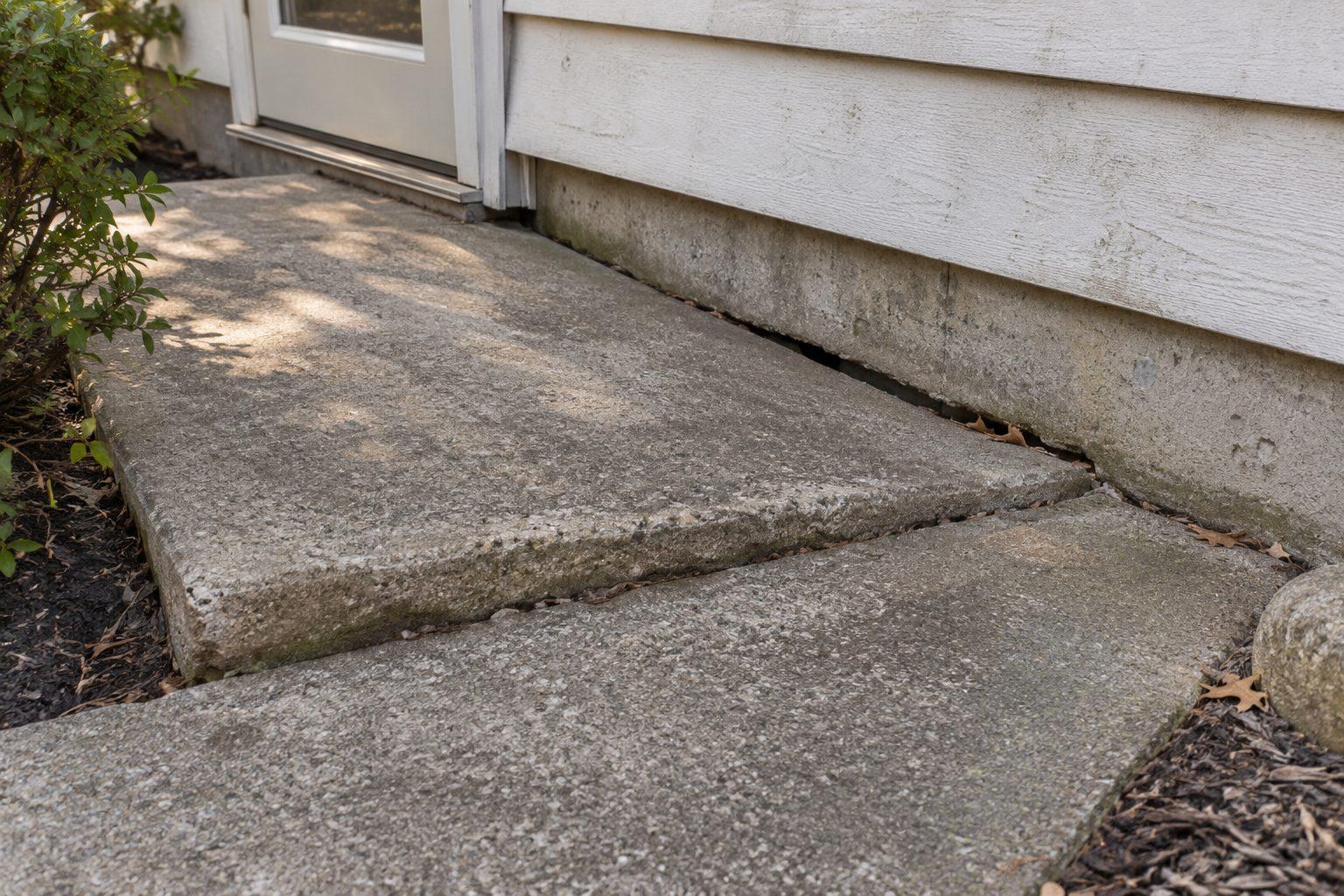
- Mudjacking pumps a cement-based slurry. It’s the less expensive option, with larger holes and a heavier fill.
- Polyurethane foam (“polyjacking”) uses much smaller holes and a lightweight foam that cures in minutes. It costs more, and published prices range widely, so get it quoted.
Lifting works when the slab itself is in one piece. A slab that’s broken into several pieces or badly cracked is usually a replacement.
Crawl space encapsulation
Encapsulation lines the crawl space floor and walls with a heavy vapor barrier and seals the seams. The vents are closed, and a dehumidifier usually controls the air. It can stop ground moisture from feeding mold and dampening the floors above. Across Monroe, Pike, Carbon and Wayne counties, the price depends mostly on the floor area and how wet it is.
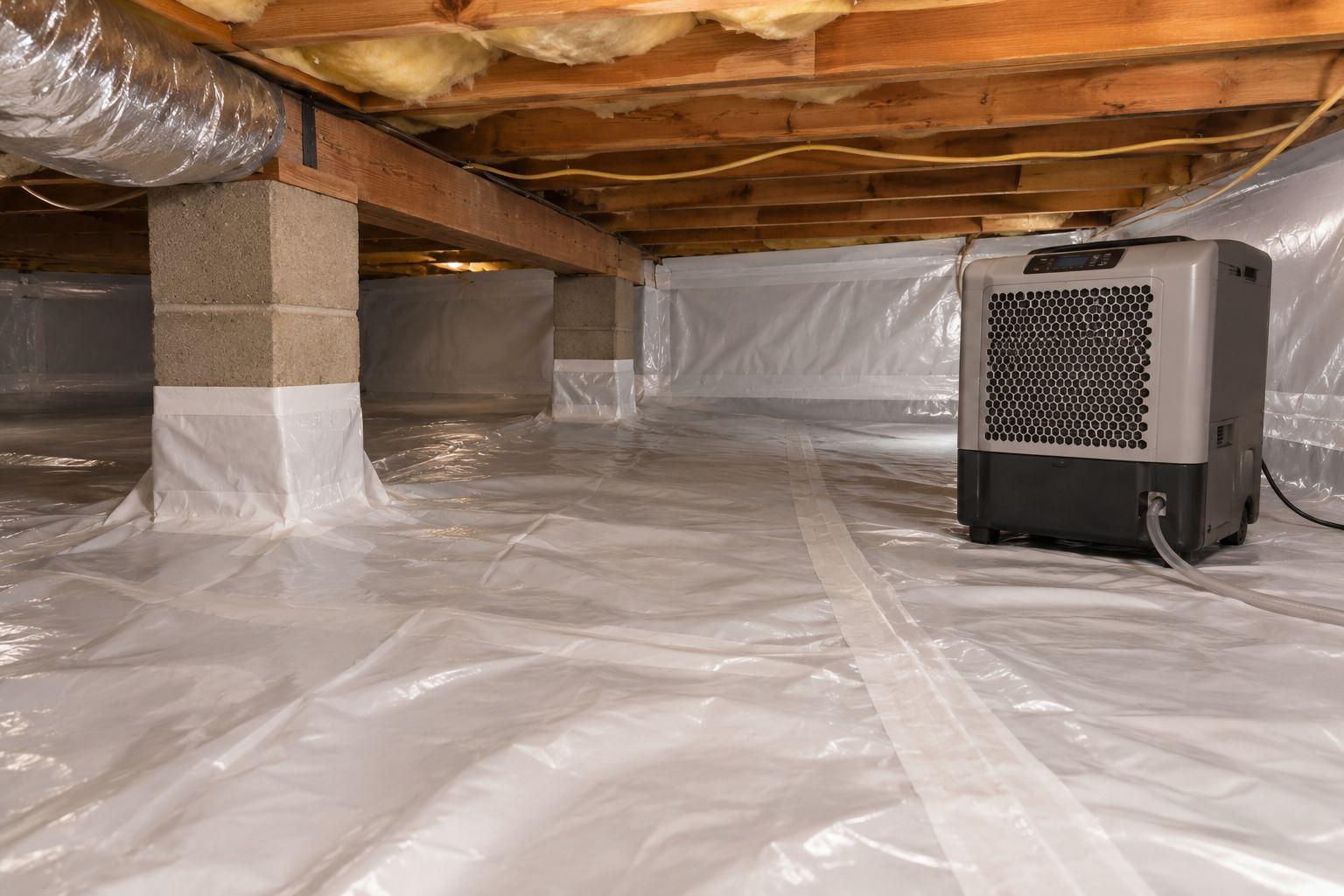
If there’s standing water, a liner over it just hides the problem. Grading or drainage comes first, and a good quote says so.
Basement floor epoxy and flake coatings
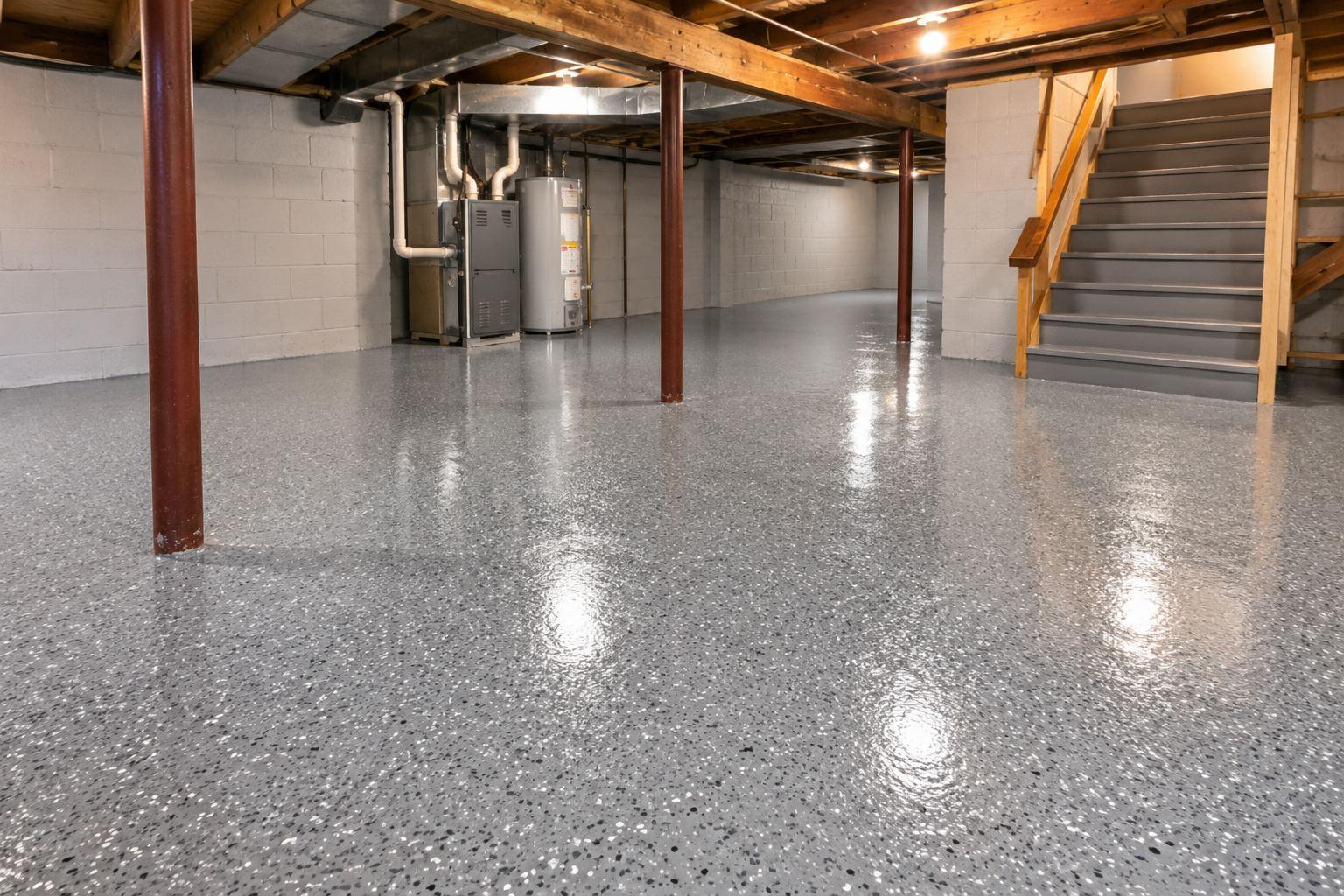
Epoxy and flake systems turn a dusty, stained concrete floor into a sealed, easy-to-clean one. On a basement slab, the deciding step happens before any coating. Moisture coming up through the concrete can lift a coating off.
Expect the contractor to test for moisture and grind the surface. On a damp slab, that prep is a real part of the price.
Why winter
Outdoor concrete usually isn’t poured in freezing weather, but all of the work on this page happens inside or under an existing slab. Contractors’ calendars are usually more open, and fixing a leak or a moisture problem before the spring thaw is better than after it. Outdoor work like stamped concrete patios is priced now and poured once the weather allows.
Common questions
How much does foundation crack repair cost?
Injecting a crack in a poured concrete wall typically runs $300–800 per crack, based on published 2025–26 pricing. Cracks that suggest the wall is moving need a structural look first, and that changes the job. For a range on your own wall, use the estimator’s Indoor & repair tab.
Is mudjacking or foam better for a sunken slab?
Mudjacking costs less, at about $3–8 per square foot based on published 2025–26 pricing (see the estimator). Polyurethane foam uses smaller holes. It’s also lighter and cures faster. Its published prices vary too widely to give a useful range, so ask for both prices. Both work on a slab that’s still in one piece.
How much does crawl space encapsulation cost?
Based on published 2025–26 pricing, typically $3–7 per square foot of crawl space floor, or $7–10 in a wet crawl space (standing water needs fixing first), plus $800–2,000 if a dehumidifier is added. For a range on your own crawl space, use the estimator’s Indoor & repair tab.
Can concrete work be done in the winter in the Poconos?
Outdoor pours usually pause in deep winter, because fresh concrete can be damaged if it freezes before it gains strength. Indoor and under-slab work (crack injection, slab lifting, crawl spaces and floor coatings) can be done all winter.
Do I need to be home for a repair estimate?
Not to start. The estimator gives a range from a few questions, and for the site visit, you or a property manager can let a local concrete contractor in.
How much does basement floor epoxy cost?
Based on published 2025–26 pricing, a basic epoxy coating typically runs $3–7 per square foot and a flake or metallic system $7–12 before any extra prep a damp slab needs. For a range on your own floor, use the estimator’s Indoor & repair tab.
Other work priced here
Price the repair now, even in January.
The price range is free. See it first, then a local concrete contractor follows up.